Kicks, Clout, and Cold Hard Cash: Inside NYC's Obsessive Sneaker Trading World
There's a line forming outside a nondescript building on Wooster Street before most New Yorkers have finished their morning coffee. Nobody's waiting for brunch. Nobody's there for a sample sale. They're there for a shoe — specifically, a limited-run collaboration that dropped at midnight online and sold out in forty-three seconds flat. Welcome to the sneaker economy, New York City edition, where the hustle never clocks out and a box of foam and rubber can be worth more than a month's rent.
NYC has always had a complicated love affair with sneakers. From the B-boys of the Bronx guarding their shell-toe Adidas in the '80s to the Supreme-era chaos of the early 2000s, this city didn't just participate in sneaker culture — it invented the rules. But what's happening right now? That's something else entirely.
The Shop Floor Is Just the Beginning
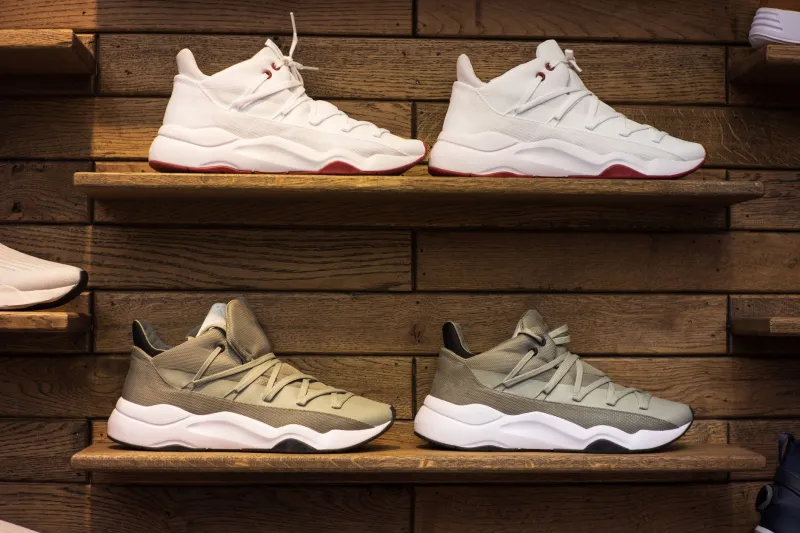
Walk into any of the major consignment boutiques scattered across SoHo and Lower Manhattan — places like Stadium Goods or the rotating cast of curated resellers on Broadway — and you'll notice the vibe is less sneaker store, more art gallery. Shoes sit in climate-controlled cases under surgical lighting. Price tags swing between $400 and $4,000. Staff members speak about colorways and production runs the way sommeliers talk about vintages.
"People come in here treating it like a museum," says one longtime floor associate at a SoHo consignment shop who asked to remain anonymous. "They'll spend an hour studying a pair they have no intention of buying. It's research. It's reverence."
The brick-and-mortar side of the resale market is polished, almost theatrical. But it's really just the visible tip of a much stranger iceberg.
Discord Is the New Back Alley
Below the surface — sometimes literally, in basement apartments across Brooklyn and Queens — there's a parallel economy running on Discord servers, private Instagram DMs, and invitation-only group chats where serious money changes hands with zero fanfare. These are the spaces where a pair of 1985 Nike Air Jordan 1s in deadstock condition gets auctioned off to the highest bidder, where authentication debates rage for hours, and where the phrase "legit check" carries the weight of a legal deposition.
Getting into these communities isn't easy. You need vouches, a rep, and usually a proven track record of clean transactions. Think of it like a speakeasy, but instead of a password, you need receipts — literally. Screenshots of past deals, proof of collection, maybe a photo of your grail shelf to establish credibility.
"The Discord game is where the real collectors live," explains Marcus, a 28-year-old Bushwick-based reseller who's been in the game since he was flipping Yeezys out of his high school locker. "The public market is for people who want to look like they're in the culture. The private channels are where the culture actually happens."
Marcus estimates he moves between $15,000 and $30,000 worth of product per month, almost entirely through these closed networks. He's not unusual. In a city this dense with taste-makers, hustlers, and people with disposable income and an eye for what's next, the sneaker underground has become a genuine parallel economy.
The Authentication Arms Race
With big money comes big fraud. The counterfeit sneaker industry is sophisticated enough that even experienced collectors get burned. Enter the authenticators — a new class of urban expert whose entire professional identity is built around knowing the difference between a real pair of Off-White x Nike Dunks and a convincing fake from a Guangzhou factory.
Some of these folks work for the big platforms. Others operate independently, charging anywhere from $20 to $150 per pair for a legit check, leveraging years of obsessive study, UV lights, and an almost supernatural ability to spot a misaligned swoosh or a wrong-weight insole.
"I've been doing this long enough that I can feel a fake before I even look closely," says Destiny, a Harlem-based authenticator who runs a small but respected verification service out of her apartment. "The weight, the way the leather sits, the smell of the glue — it all tells you something. Fakes have gotten better, but so have we."
Destiny's clientele includes both private collectors and small resale shops that need a second set of expert eyes before they stake their reputation on a pair. It's a niche career that didn't exist a decade ago, and it's thriving.
Investment Grade, Street Level
Here's the part that would've sounded absurd even ten years ago: people are buying sneakers the way they buy stocks. Financial analysts have started tracking sneaker indices. Platforms like StockX publish real-time market data on thousands of models. And in New York — a city wired for financial thinking — serious collectors have started building portfolios, not just collections.
Vintage Air Jordans have outperformed the S&P 500 in certain multi-year windows. Rare New Balance collabs from Boston-area designers appreciate quietly but steadily. And certain Nike SB Dunks from the early 2000s — the ones that were only available in specific skate shops and were largely ignored at retail — now command prices that make grown adults emotional.
"I bought a pair of Pigeon Dunks for $200 back in 2005 because I thought they were cool," recalls James, a 41-year-old financial professional who splits his time between the West Village and a storage unit in New Jersey where he keeps his collection. "They're worth somewhere north of $15,000 now. I've made worse investments in actual stocks."
The Culture Beneath the Commerce
It would be easy to look at all of this — the Discord servers, the authentication services, the investment portfolios — and see the soul of sneaker culture getting swallowed by capitalism. And sure, there's tension there. The heads who were lining up for Jordans in the '90s because they loved the shoe sometimes bristle at the algorithmic bot-buyers who cop pairs just to flip them.
But spend enough time in these communities and you'll find something more complicated than pure greed. There's genuine passion here, genuine scholarship. People who can recite the entire production history of the Air Max 1 from memory. Kids from the Bronx who found community and purpose in sneaker culture the same way earlier generations found it in hip-hop or graf.
New York has always been a city where hustle and art live in the same building, usually arguing about the heat. The sneaker underground is just the latest expression of that. It's commerce, sure. But it's also culture — loud, obsessive, endlessly creative, and completely, unmistakably New York.