Ghost Venues and Secret Handshakes: How to Crack NYC's Most Exclusive Pop-Up Scene
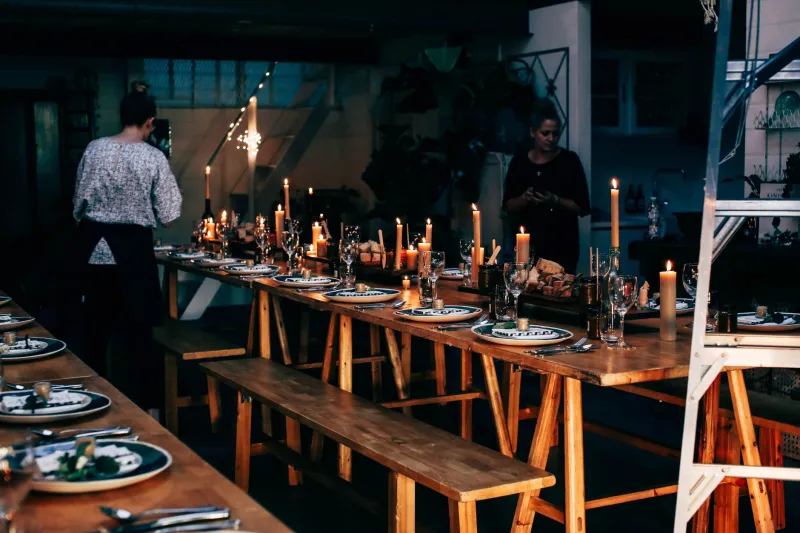
Somewhere in Bushwick right now, there's a supper club operating out of a converted warehouse that seated exactly 22 people last Saturday night. The menu changed twice mid-service. Nobody posted the address publicly. And somehow, every seat was full.
This is the new New York — a city that has always thrived on reinvention, now perfecting the art of the vanishing act. Pop-up experiences, underground dinner parties, invitation-only warehouse raves, and nomadic cocktail bars have become the cultural currency of a certain kind of urban insider. And if you haven't been invited yet, you've almost certainly heard about one the morning after.
So what's actually going on here? And more importantly — how do you get in?
Why Disappearing Is the Ultimate Flex
Let's be honest: exclusivity has always been part of New York's social fabric. The velvet rope didn't die — it just went digital, then went dark. Today's most coveted experiences have ditched the bouncer at the door in favor of something far more sophisticated: controlled scarcity.
Event curators — and yes, that's genuinely what they call themselves now — understand that the less information you put out into the world, the louder the conversation gets. A pop-up dinner with no Yelp page, no Instagram grid, and a two-week waitlist generates more genuine buzz than a splashy restaurant opening with a $40,000 PR budget. The psychology is almost embarrassingly simple: people want what they can't easily have.
"We deliberately limit everything," says one Brooklyn-based collective that runs monthly underground dining experiences under a name we've agreed not to publish. "The cap, the notice period, the communication channel — all of it is designed to reward people who are genuinely plugged in and genuinely curious. It's not about being elitist. It's about creating a room full of people who actually care."
That distinction — between exclusivity as gatekeeping and exclusivity as curation — matters a lot to the people running these events. Many of them started precisely because they were tired of the transactional nature of mainstream nightlife and dining. They wanted something that felt alive.
The Anatomy of a Pop-Up
Not all underground experiences are built the same. NYC's phantom event scene roughly breaks down into a few distinct formats:
The Roving Supper Club — A recurring dinner series that changes location every time, usually announced 48 to 72 hours in advance via a private newsletter or Signal group. Menus are often themed, chefs are frequently rotating guests, and the vibe sits somewhere between dinner party and performance art.
The One-Night Venue — A space that exists for a single evening. Think an abandoned Midtown office floor transformed into a jazz lounge, or a Red Hook rooftop converted into a cocktail bar for exactly one Saturday in September. These tend to circulate through arts and creative communities first.
The Coded Announcement — Events that are technically public but deliberately obscure. The address might be hidden inside a QR code embedded in street art. The password might be buried in a podcast episode. Getting in requires attention, and that's the whole point.
The Community-Embedded Experience — Perhaps the most genuine of the bunch. These are events that grow organically out of specific cultural communities — a queer nightlife collective, a West African food diaspora group, a mutual aid network. Outsiders can access them, but only by actually showing up to the community first.
How to Actually Get Yourself In the Room
Here's where we get practical, because all the atmospheric description in the world doesn't help you if you're still watching other people's Stories from your couch.
Build your newsletter stack intentionally. The single most reliable access point to NYC's pop-up world is the humble email newsletter. Look for hyper-local cultural newsletters covering your borough or neighborhood — not the big media ones, but the ones written by one person who goes to everything. Subscribe, read every issue, and click every link. These writers are often directly connected to event organizers.
Get off the main feed. Instagram's algorithm is not your friend here. The accounts organizing underground events often have modest follower counts, post inconsistently, and don't use hashtags. Follow people, not brands. Follow the photographers, the food stylists, the local DJs — the people who are actually in the rooms, not the accounts recapping them three days later.
Show up to the edges first. Every exclusive community has public-facing entry points. A supper club might host a free tasting once a quarter. A nightlife collective might throw an open party every few months. These aren't the main events — they're auditions. Go, be a real person, talk to people, come back again. Consistency signals genuine interest in a way that a DM never will.
Volunteer, contribute, participate. A lot of underground events run lean and rely on community support. Offering to help — with setup, with documentation, with promotion within your own network — is one of the fastest ways to move from the waitlist to the inner circle. It also happens to be the most honest approach.
Embrace the borough spread. Manhattan's pop-up scene is real, but the most interesting stuff is consistently happening in the outer boroughs. Bed-Stuy, Sunnyside, the South Bronx, Jamaica, Queens — these neighborhoods have dense, active creative communities running events that never make it onto the midtown radar. Expand your geography and you'll expand your access dramatically.
The Morning-After Problem
There's a tension at the heart of all this worth naming: the more coverage underground experiences get, the less underground they become. Writing about them — even carefully — participates in the cycle of exposure that eventually kills the thing being celebrated.
The curators we spoke to are aware of this. Most of them have watched something they built get discovered, go viral, get overwhelmed, and die within a single season. The ones that survive tend to be the ones that grow slowly, stay community-rooted, and resist the temptation to scale.
"The goal was never to be the next big thing," one organizer told us. "The goal was to make something worth protecting."
Maybe that's the real lesson here. The best pop-up experiences in New York aren't prizes to be won — they're communities to be joined. The city has always rewarded people who show up with genuine curiosity and stay for the long game. The address changes. That part doesn't.